Once upon a time, software development was tethered to physical offices — the hum of servers in on‑site data centers, whiteboards crowded with sticky notes, and coffee‑fueled stand‑up meetings inside fluorescent‑lit cubicles. Fast‑forward to the 2020s, and that world has been upended. The rise of high‑speed connectivity, cloud‑native tools, and a redefinition of what “work” means has dramatically transformed how software is conceived, built, and deployed.
The pandemic acted as both an accelerant and a catalyst, forcing even traditional organizations to adopt remote models overnight. Yet, what began as a necessity has matured into an intentional, global movement — a distributed development culture that prizes flexibility, inclusion, and efficiency over geographic proximity. Developers once confined by office walls are now building, testing, and deploying software from virtually anywhere — whether that’s a home office in Lagos, a co‑working hub in Berlin, or a beachfront café in São Paulo.
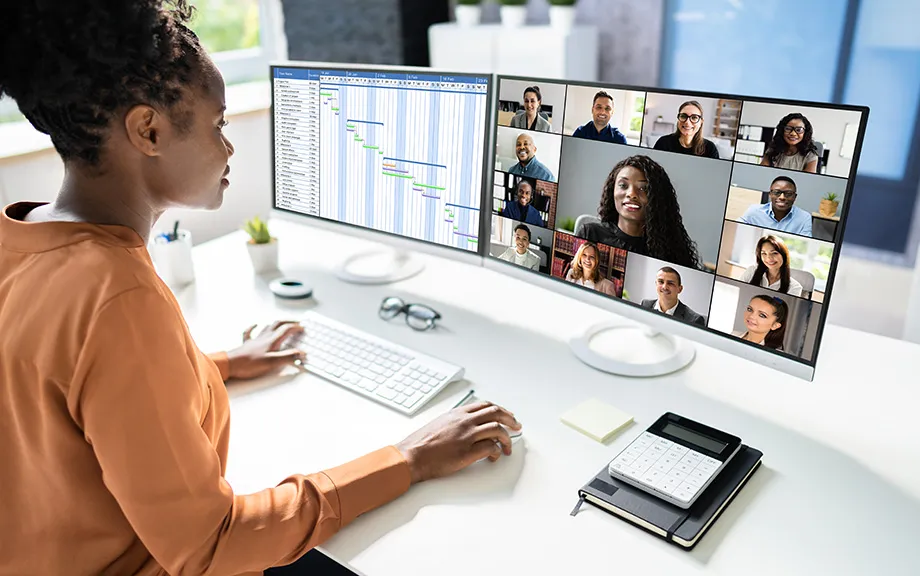
What makes today’s global developer teams so effective isn’t just remote freedom — it’s the technology stack that makes seamless collaboration possible. Cloud‑based repositories like GitHub, GitLab, and Bitbucket have become the new collaborative arteries, while continuous integration and continuous deployment (CI/CD) pipelines ensure code can move from idea to production in hours, not weeks. Video conferencing platforms such as Zoom and Teams have evolved into cultural meeting grounds, fostering not just communication but a shared identity among developers who might never meet in person.
Asynchronous workflows are reshaping productivity norms. Developers can hand off tasks across time zones, effectively extending development cycles into a 24‑hour operation. A bug identified in Vancouver at the end of the day can be fixed by a colleague in Singapore before morning arrives in North America. This constant progression is redefining what agile truly means — adaptive not only in process but in geography and collaboration.
Cross‑cultural exchange has become a cornerstone of this new landscape. Distributed teams bring together diverse viewpoints, technical philosophies, and design sensibilities. This diversity not only enhances innovation but also nurtures empathy and inclusivity in product design. Software created by global teams often reflects broader accessibility considerations and richer user experiences — digital products that feel more “world‑ready” from day one.
The shift has not been without challenges. Time zone differences can fracture communication, language nuances may impact understanding, and some developers must work harder to maintain visibility in asynchronous environments. Yet technology continues to evolve to close these gaps. Artificial intelligence is now helping to automate code reviews, summarize project communications, and even bridge language barriers, while project management platforms integrate real‑time analytics to keep everyone aligned regardless of their location.
For organizations, the distributed model has unlocked access to a global talent pool once limited by geography. Startups and enterprise giants alike are now able to recruit developers based purely on merit, not proximity. This democratization of opportunity has led to more equitable hiring practices, competitive pay for skilled engineers in underserved regions, and a renaissance of creativity driven by the global community’s collective intellect.
Furthermore, as sustainability becomes a front‑page issue, remote work plays a role in reducing the industry’s carbon footprint. With fewer commutes, smaller physical office footprints, and digital‑first workflows, the tech world has unintentionally found itself on a greener path.
Ultimately, what we are witnessing is not just a structural change but a philosophical one. Remote work has proven that software engineering is less about where you are and more about what you contribute. The old boundaries between “onsite” and “remote” have dissolved, replaced by a shared digital ecosystem where innovation thrives on open collaboration and mutual trust.
As the global tech ecosystem continues to expand, remote‑first developer networks have become the backbone of modern engineering. These networks have redefined the principles that once governed software production and distribution. Longstanding norms — rigid office hours, centralized management, and hierarchical communication — are being replaced with transparency, distributed decision‑making, and a culture of continuous learning.
The integration of cloud computing, DevOps maturity, and AI‑augmented collaboration tools has made it possible for organizations to operate at an unprecedented scale. Agile methodologies, originally crafted for co‑located teams, are now being optimized for remote environments through shorter feedback loops, distributed sprint reviews, and a deeper reliance on documentation and automation.
In this emerging paradigm, resilience and adaptability are as valuable as technical prowess. Developers must navigate not only complex codebases but also complex human networks that span languages, time zones, and cultures. Successful teams understand that trust is their primary currency — when work is conducted asynchronously, accountability, transparency, and communication replace oversight and micromanagement.
The benefits ripple outward. Remote‑first models create equitable access to the world’s best projects, regardless of geography or socioeconomic background. They also encourage companies to invest in professional development and well‑being, acknowledging that retention and motivation in distributed environments depend on respect for personal autonomy and balance.
In many ways, global developer teams have become the architects of a new industrial mindset — one that aligns technical excellence with social and cultural evolution. By dismantling the barriers that once separated talent across cities and continents, the industry is building not just more scalable software, but a more interconnected human network.
The evolution of remote work is far from over. As quantum computing, 5G connectivity, and generative AI continue to unfold, the boundaries of what “working together” means will be pushed even further. But one thing is certain: the collaboration model born from necessity has matured into a permanent fixture of the digital era — one defined by creativity without borders, productivity without walls, and innovation driven by the collective genius of a truly global community.
In the end, remote work isn’t simply about developers logging in from different places. It’s about reimagining the very fabric of how we create — a quiet revolution proving that the future of software, and perhaps work itself, lies not in where we are, but in how we connect.
