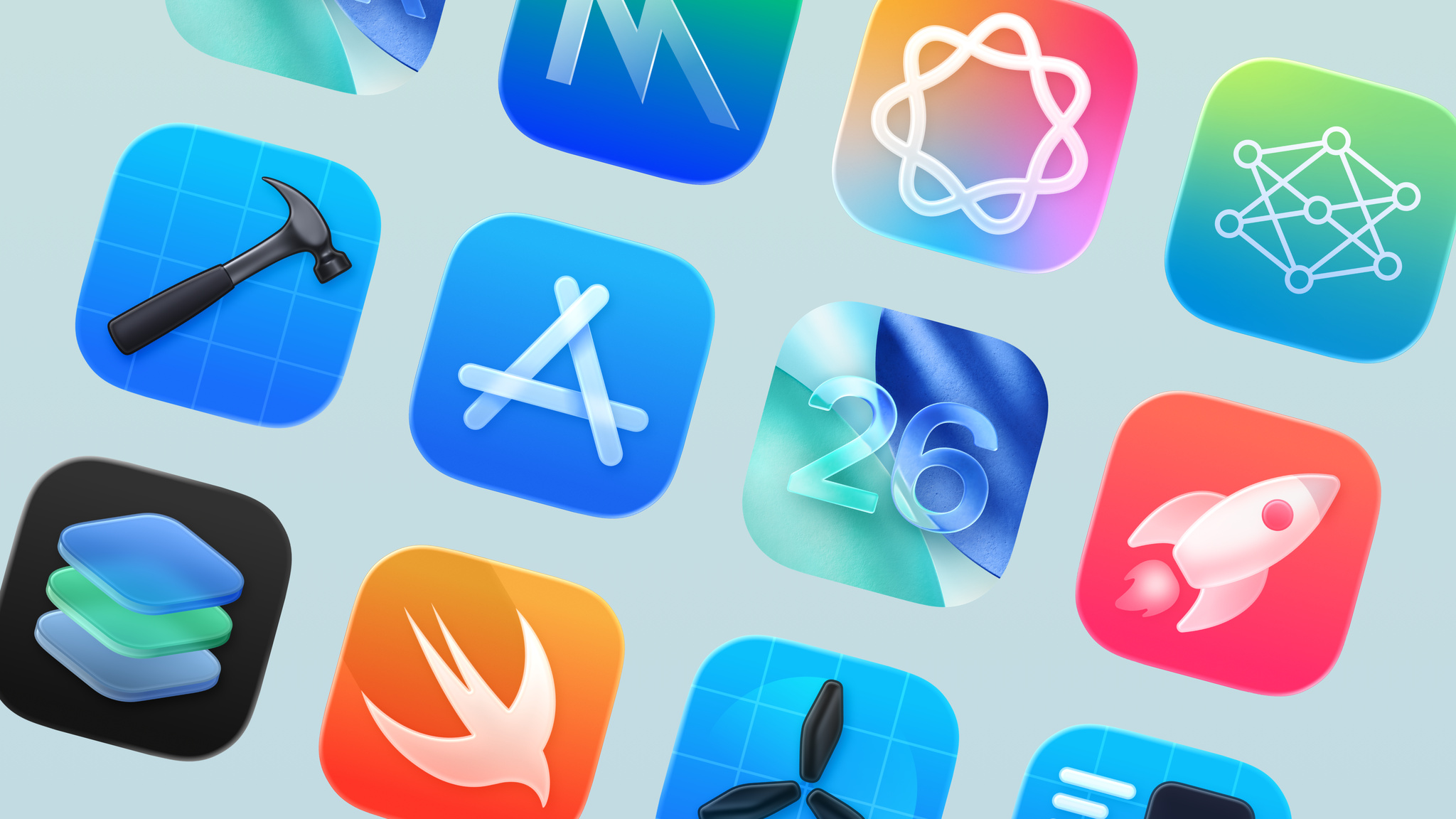
In its latest Worldwide Developers Conference (WWDC), Apple once again demonstrated its deep commitment to advancing the developer experience and pushing the boundaries of what can be built across its platforms. At the heart of this year’s event was a sweeping rollout of new tools and frameworks designed to simplify complex workflows, maximize performance across Apple Silicon, and deliver unmatched scalability for apps running on iPhone, iPad, Mac, Apple Watch, Apple TV, and Vision Pro.
The company’s announcements underscored a clear strategic direction: blending intelligence, creativity, and integration. From machine learning–driven APIs to more powerful simulation tools in Xcode, Apple is equipping developers to craft applications that are not only faster and smarter but also more context-responsive. By focusing on cross-device harmony, the Cupertino-based giant continues to prioritize a unified app ecosystem in which data, content, and performance flow effortlessly between devices — serving both end users and professional developers in equal measure.
Apple also highlighted the growing synergy between its proprietary chipsets and software frameworks. With the latest generations of Apple Silicon providing unparalleled processing power and energy efficiency, developers can now leverage deeper hardware-level optimizations. These refinements not only boost performance but also enable more immersive graphical experiences and faster AI computation, setting the groundwork for next-generation augmented and mixed-reality applications.
Beyond the hardware-software interplay, Apple’s enhancements in developer productivity are transformative. The expanded features in Xcode, Swift Playgrounds, and test automation make it easier for development teams large and small to build, iterate, and distribute apps with speed and reliability. Combined with Apple’s global distribution network and robust privacy-fueled infrastructure, the ecosystem continues to be an attractive and powerful environment for innovation.
Among the headline updates, the continued evolution of Swift stood out as a centerpiece of Apple’s developer-first philosophy. The latest version of the language introduces performance tuning features, enhanced concurrency handling, and improved interoperability with C++ libraries. These refinements give developers more expressive power while maintaining Swift’s hallmark simplicity and safety.
Xcode, Apple’s flagship development environment, has been reimagined with smarter debugging instruments, faster build times, and new AI-assisted code suggestions that streamline day-to-day coding. Tools like live previews and performance visualizers are becoming more responsive, while integrated analytics help developers pinpoint bottlenecks in rendering, networking, or computation.
Perhaps the most notable leap forward lies in SwiftUI, the declarative interface framework that has revolutionized how apps are designed across Apple’s devices. The new iteration offers expanded layout capabilities, advanced animation controls, and improved runtime efficiency — all intended to reduce development friction and encourage creative expression. Developers can now bring consistent experiences to large-screen and spatial environments with minimal code adjustments, which is critical as Apple continues to invest in the Vision Pro platform and its broader vision for spatial computing.
For creators working with immersive and spatial technologies, ARKit and RealityKit received major overhauls. These upgrades make rendering more accurate, environment mapping faster, and integration with 3D assets easier to manage. Apple also introduced new Reality Composer Pro features that help creators blend digital and physical worlds with unprecedented realism and responsiveness.
AI and machine learning continue to be strategic pillars for Apple’s developer ecosystem. This year’s WWDC introduced powerful new Core ML updates, including more efficient model loading, quantization tools to shrink model sizes, and APIs for real-time inference on the latest Apple Neural Engine. Together with the Vision and Natural Language frameworks, developers gain access to tools that enable context awareness, object recognition, sentiment analysis, and live media understanding — critical components for next-generation “smart” apps.
Security, privacy, and testing also took center stage. Apple rolled out refined security protocols supporting granular permission handling, safer data access, and real-time monitoring of app behavior. These measures ensure that robust privacy safeguards remain integral to the development process, reinforcing Apple’s reputation as a privacy-first technology leader.
Meanwhile, collaboration tools within Xcode Cloud and TestFlight expansions are making team-based development more fluid. Continuous integration pipelines now support more advanced automation, while beta distribution workflows have been simplified to allow easier feedback loops between developers, testers, and designers.
In essence, WWDC’s announcements reflect Apple’s evolving understanding of the modern app development landscape — one defined by the convergence of hardware horsepower, intelligent frameworks, and design-driven innovation. With its expanded suite of developer resources, Apple is not merely offering incremental updates but actively shaping the foundations of how digital experiences are imagined, built, and shared across the world.
For developers, these new tools promise not only efficiency but opportunity — a chance to experiment within an ecosystem that’s wider, faster, and smarter than ever before. And for Apple, they reaffirm a simple truth that has guided the company since its inception: when technology empowers creators, innovation follows naturally.
